Trading: A Simple 9:30 AM Strategy Built on Three Steps
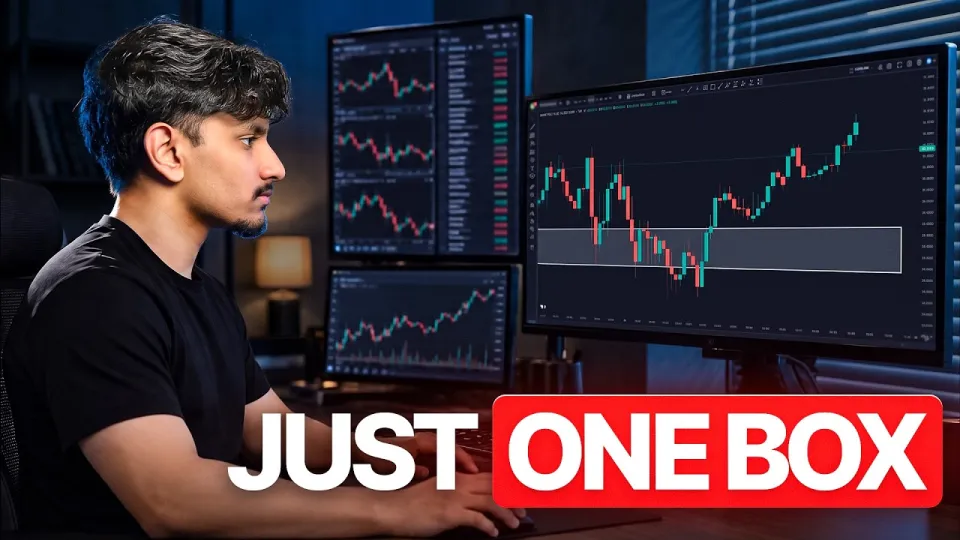
Video: Once You Master This Strategy, Trading Becomes Incredibly Simple
You can order the same kind of articles for your own video to boost it on YouTube and Google. Just message the Telegram bot @sat_sit_bot. The bot writes and publishes the articles itself (with your YouTube video embedded) on popular topical websites (no ads). Try it free: 50 articles on us.
· based on the channel Scarface Trades
Trading becomes simpler when you stop collecting indicators and start following one repeatable routine around a fixed moment in the session. The approach that Scarface Trades breaks down in the video “Once You Master This Strategy, Trading Becomes Incredibly Simple” is a three-step 9:30 AM framework: mark the levels that matter, wait for price to retest a level it has broken, and only then take an entry with confirmation. A free written version of the method is available through the Simple Trader Playbook course.
Why most traders struggle before they ever find a strategy
Most traders lose because they run several conflicting tools at once and act on the first signal that appears, which produces inconsistent decisions rather than a repeatable process. Two indicators can point one way, a trend line another, and the trader ends up guessing. The video's argument is that the problem is not a shortage of strategies but a shortage of a single, disciplined routine that is applied the same way every session.
The 9:30 AM window matters because it is the New York cash open, when volume and volatility are at their highest and the day's first real liquidity appears. That combination creates clean reactions at obvious reference points — and those reactions are what the strategy is designed to capture. Trading a quieter hour with the same rules gives far fewer, far messier signals.
The three-step trading framework in detail
The framework is a sequence: identify levels, wait for a retest, then enter on confirmation. Each step filters out a specific mistake, and skipping any one of them turns the method into ordinary breakout chasing.
- Set up the trade. Before the open, mark the reference levels where price is likely to react: the previous day's high and low, the prior day's close, and the overnight or premarket high and low. These are the prices where resting orders cluster, so they are where the day's first meaningful decision gets made.
- Wait for the break and the retest. Let price push through one of those levels, then wait for it to come back and test the same area from the other side. A level that flips from resistance to support (or the reverse) is the setup; the first push through it is not.
- Apply the entry model. Enter only when the retest produces a confirmation signal on the lower timeframe — a rejection wick, a strong close back in the direction of the break, or a small structure shift. The stop goes on the far side of the level that just held, and the target is the next marked level.
The logic behind step two is that a broken level which holds on the retest shows that the move had real participation behind it. A level that fails on the retest shows the opposite, and the trade is skipped. That single filter removes a large share of the false starts that make breakout trading frustrating.
Reading the chart without indicator clutter
Price action around marked levels is the entire signal set, which is why the method needs no indicator stack. A level is simply a price the market has already reacted to; the reaction on the retest — how fast price leaves, how much of the level it closes through, whether the wick rejects or accepts — tells you whether the level is being defended or abandoned.
This is also where the timeframe question matters. Levels are drawn from higher-timeframe data (daily and premarket ranges), while the entry confirmation is read on a much faster chart. Traders who dislike the 1-minute chart can read the same confirmation on the 5-minute, at the cost of a later and slightly worse entry price. The structure of the trade does not change; only the resolution of the trigger does.
Position sizing, risk and why the setup looks easier in hindsight
A retest entry near a defined level allows a tight stop, so the risk per trade is small and the reward-to-risk ratio is set by the distance to the next level, not by the size of the position. That is the answer to the common worry that this style of trading needs an enormous position to be worthwhile: the edge comes from the ratio between a tight stop and a distant target, and it compounds over many trades rather than in one.
Two honest caveats belong here. First, these setups always look cleaner on a completed chart than they do live, so the method has to be backtested and forward-tested on your own instrument before any real capital is committed. Second, one good example proves nothing — the video's single 6R-style winner is an illustration of the process, not evidence of a win rate. Treat the framework as a filter that improves the quality of your decisions, not as a promise of profit.
Common questions traders raise about this approach
Several recurring doubts come up around the method. On time zones: the 9:30 AM reference is New York time, so traders elsewhere need to convert it to their own session clock and trade the equivalent local window. On instruments: the same level-and-retest logic applies to index futures, large-cap stocks such as TSLA, and major forex pairs like EURUSD, though spreads and session behaviour differ and should be checked per market.
On what happens when price sits in the middle of the previous day's range: there is no level to react to, so the correct action is to wait until price reaches one. On which candle to enter: the entry is taken after the confirmation candle closes, not in the middle of it, so the signal is complete. And on focus: two or three instruments traded consistently beat a long watchlist, because you learn how each one behaves around its own levels.
Useful links
- Free Simple Trader Playbook course
- The Accelerator — private community and live trading
- Scarface Trades on Instagram
- Scarface Trades on X
Final thoughts
Trading gets simpler when the decision is reduced to three questions asked in the same order every morning: which levels matter, has one been broken and retested, and is there confirmation to enter. The 9:30 AM framework from Scarface Trades is valuable precisely because it is a checklist rather than a prediction, and a checklist can be tested, measured and improved. Start with the free Simple Trader Playbook, backtest the retest rule on your own market, and keep risk per trade small while you gather evidence.
Key takeaways
- The strategy is built around the 9:30 AM New York market open, when volume and volatility peak.
- It has three steps: mark key levels, wait for a retest of a broken level, then enter on a confirmation signal.
- Entries are taken on lower timeframes, but the levels themselves come from higher-timeframe reference points.
- Most losing traders fail not from a lack of indicators but from chasing breakouts instead of waiting for the retest.
- The method is presented as a repeatable checklist, not a guarantee — backtesting and risk limits stay mandatory.
Source: Once You Master This Strategy, Trading Becomes Incredibly Simple · Markdown version
Questions & answers
What time zone does the 9:30 AM strategy use?
The 9:30 AM reference is New York time, the open of the US cash session. If you trade from another region, convert that window to your local clock and apply the same rules to the equivalent high-volume period in your market.
Where exactly do you enter — on the breakout candle or after a retest?
After the retest. Price breaks a marked level, then comes back to test it from the other side, and the entry is taken once a confirmation candle closes in the direction of the break. Entering on the initial breakout skips the filter that makes the setup selective.
Does this work on forex pairs like EURUSD, or only on stocks and futures?
The level-and-retest logic is instrument-agnostic and applies to major forex pairs as well as index futures and large-cap stocks. What changes is the session you trade and the spread you pay, so check how a pair behaves around its own key levels before committing.
Do you need a huge position for this strategy to be profitable?
No. The edge comes from a tight stop placed just beyond the level that held and a target at the next marked level, which produces a favourable reward-to-risk ratio on a normal position size. Profitability depends on the ratio and consistency over many trades, not on position size.