Is the Trump meme coin a scam and what does the Senate fight over it actually reveal?
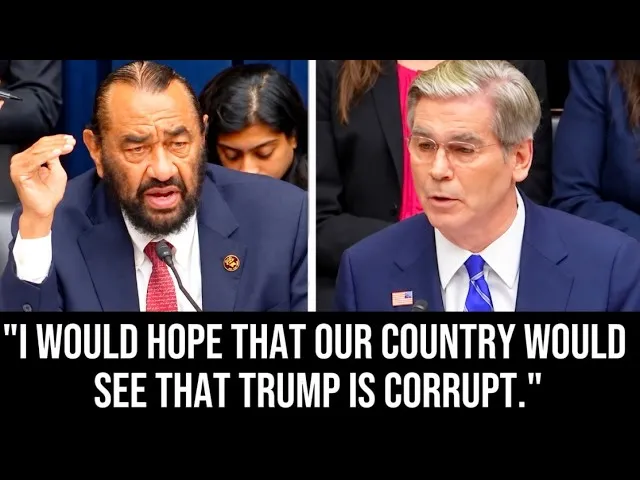
Video: WHOA: Al Green GRILLS Bessent over Trump's meme coin “scam”
You can order the same kind of articles for your own video to boost it on YouTube and Google. Just message the Telegram bot @sat_sit_bot. The bot writes and publishes the articles itself (with your YouTube video embedded) on popular topical websites (no ads). Try it free: 50 articles on us.
· based on the channel Daniel Reed
The Trump meme coin is a speculative token with no underlying business, revenue or cash flow, and the Senate exchange between Senator Al Green and Treasury Secretary Scott Bessent turned on exactly that point: whether a sitting president's family-branded coin is a legitimate digital asset or a vehicle for extracting money from retail buyers. Critics, including several senators, call it a scam or a pump-and-dump; defenders treat it as ordinary crypto speculation. Both descriptions can be true at once, and that is the core of the dispute.
What happened when Al Green grilled Bessent over the Trump meme coin
Senator Al Green used a Senate floor or committee exchange to force Treasury Secretary Scott Bessent to address the Trump-branded meme coin directly, and the clip circulated widely through Daniel Reed's channel. Green's line of attack was that a president whose family issues a tradable token creates an obvious conflict: policy, promotion and personal profit run through the same asset. Bessent, a former hedge fund manager before taking the Treasury post, was pushed to say whether the coin was a legitimate financial product or something closer to a scheme, and the exchange became a test of how the administration talks about crypto it is personally tied to.
The substance matters more than the theater. A meme coin has no earnings, no balance sheet and no claim on any asset. Its price is set entirely by what the next buyer will pay, which is why the term "greater fool" keeps appearing in coverage. When a political figure's name is attached, the pool of potential buyers expands to people who are buying loyalty or access rather than analyzing a chart.
Why critics call the Trump meme coin a scam
The scam label rests on structure rather than on any single transaction. Four features do most of the work:
- Concentrated supply. Meme coin launches typically reserve a large share of tokens for insiders, so early holders can sell into retail demand. If insiders control enough of the float, they can exit before ordinary buyers realize the bid is gone.
- No cash flow. There is nothing to value. A stock has earnings, a bond has coupons, a meme coin has a narrative. When the narrative fades, the price has no floor.
- Reflexive promotion. The asset rises because it is talked about, and it is talked about because it rises. Political attention amplifies the loop and makes the exit more lucrative for whoever is early.
- Thin regulatory cover. Tokens sold as collectibles or memes sit in a gray zone compared with registered securities, which limits disclosure and makes recourse after a collapse unlikely.
None of this is unique to the Trump coin. The pattern is common to the meme coin sector, which is why experienced traders treat these tokens as lottery tickets sized to what they can lose entirely.
What meme coin buyers are actually buying
Buyers are purchasing exposure to attention, not to a business. That means the relevant questions are different from equity research: who holds the supply, how much liquidity sits in the pool, what happens to the price if the top ten wallets sell, and whether trading is concentrated on one venue. A token with a shallow liquidity pool can drop double digits on a single large sell order, and a token with a lock-up schedule can crater the day the lock expires.
A second motive is access. Some buyers believe holding a politically branded token signals support or buys proximity, and that belief itself sustains demand. It is a social purchase dressed as an investment, and it works only as long as new buyers keep arriving.
Typical doubts from traders watching the hearing
The hearing triggered a predictable set of questions, and they deserve direct answers rather than slogans.
- Is it illegal? Issuing or buying a meme coin is not automatically illegal in most jurisdictions, but that says nothing about whether the terms of a specific sale violated securities or anti-fraud rules.
- Is it a Ponzi or a pyramid scheme? Strictly, a Ponzi pays old investors with new money through a central operator, while a pyramid relies on recruiting. A meme coin is closer to a greater-fool asset: early holders profit when later buyers pay more. The practical damage to late buyers is similar.
- Does the Treasury Secretary's opinion change the risk? No. A cabinet official characterizing the token does not create disclosure, insurance or a price floor.
- Can it be used to move money quietly? Blockchain transfers are public and traceable, which cuts both ways: laundering is harder than critics sometimes assume, but the transparency also means large insider exits are visible to anyone who checks the wallet.
How to assess any meme coin before buying
A short checklist covers most of the risk:
- Read the token distribution: what percentage sits with the team, the creator and the first wallets.
- Check liquidity depth and whether it is locked, and for how long.
- Identify the venues: a single thin market is a warning, not a convenience.
- Assume total loss and size the position accordingly; never borrow to buy.
- Ignore political or celebrity framing when sizing the trade. The name on the coin is marketing, not collateral.
The bottom line on the Trump meme coin dispute
The Senate exchange did not settle whether the Trump meme coin is a scam in a legal sense, and it was never designed to. What it established is that a president-linked token sits at the intersection of policy, promotion and personal profit, and that the burden of proof falls on buyers who treat it as an investment. Daniel Reed's breakdown of the Al Green and Bessent confrontation captures why the argument is unlikely to fade: the structure of meme coins rewards early holders and leaves late buyers holding an asset with no cash flow and no floor. Treat the sector as entertainment spending, verify supply and liquidity yourself, and never mistake political enthusiasm for due diligence.
Key takeaways
- Senator Al Green questioned Treasury Secretary Scott Bessent about the Trump meme coin during a Senate exchange covered by Daniel Reed's channel.
- Critics in the hearing and in viewer reaction describe the token as a pump-and-dump or Ponzi-style structure with no underlying business.
- Bessent, a former hedge fund manager, is the Treasury Secretary in the Trump administration and was asked to characterize the coin.
- Commentators argue most meme coin buyers chase access, hype or laundering cover rather than any cash-flow asset.
- Meme coins have no intrinsic value, no revenue and no regulatory protection comparable to registered securities.
Source: WHOA: Al Green GRILLS Bessent over Trump's meme coin “scam” · Markdown version
Questions & answers
Is the Trump meme coin actually a scam?
Legally, that depends on how the token was sold and whether disclosures or securities rules were broken, which no hearing settles. Structurally, it carries the classic meme coin risks: concentrated insider supply, no cash flow and a price that depends entirely on new buyers. Many critics use "scam" loosely to describe that structure rather than a proven crime.
What did Al Green ask Treasury Secretary Bessent?
Green pressed Bessent to address the president's family-branded meme coin and the conflict of interest it creates for a sitting administration. The exchange, widely shared through Daniel Reed's channel, focused on whether the coin is a legitimate product or a scheme that extracts money from supporters. Bessent's responses were criticized as evasive.
What is the difference between a Ponzi scheme and a meme coin?
A Ponzi scheme is run by a central operator who pays earlier investors with money from later ones, usually with fabricated returns. A meme coin has no operator promising returns; it is a tradable token whose price rises only if someone pays more later. The mechanism differs, but late buyers can lose just as completely.
Should retail traders buy political meme coins?
Only with money you can afford to lose entirely, and only after checking token distribution, liquidity and where it trades. Political branding is marketing, not collateral, and a cabinet official's comments create no price floor or investor protection. Most experienced traders size these positions as entertainment, not investment.